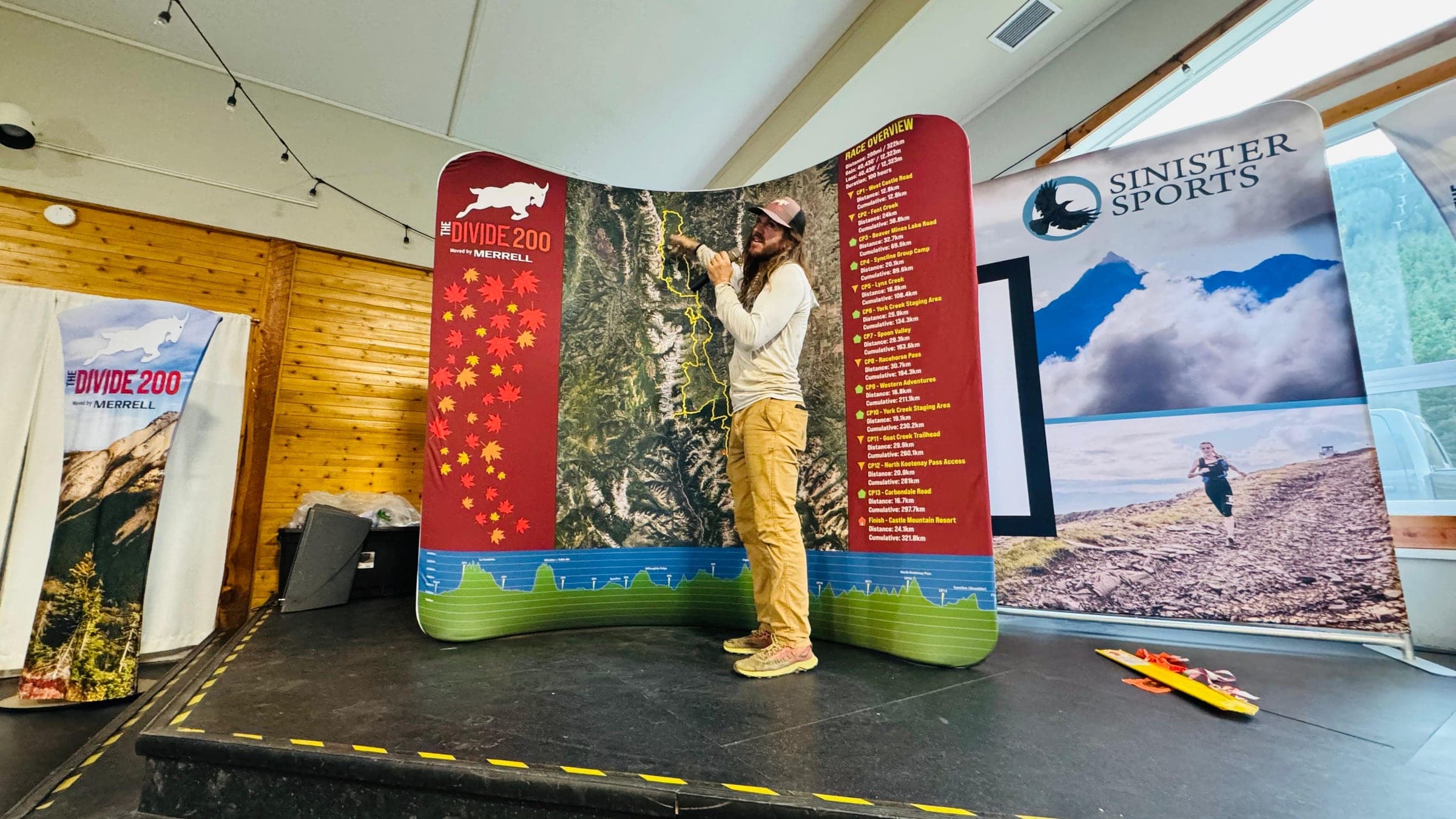
Keynote Speaker · Alberta, Canada · goshep.run
The Mountain Method
Expand your range.
A resilience keynote for corporate teams and leadership groups. The right kind of hard, in the right dose, makes people stronger. I learned that on 200-mile mountain courses, and it works the same way on a team.
Also booking: Planning for Single or Multi-Day Trail Efforts, for run clubs, race expos, and outdoor brands.
5x
Team Canada
Big Dog's Backyard Ultra
21h 23m
Standard Route FKT
Crowsnest High Five, 101.07 km, five summits
701 km
Six days on foot
Across the Years, 2nd overall
205 km
First ever finish
Columbia Plateau Trail FKT
Treaty 7
Territory
Crowsnest Pass, AB
20-60
Minute Keynote
Formats available
Already know you want Shep on your team?
Tell me about your event in 60 seconds, or grab the one-page speaker sheet for your committee.
The Mountain Method Keynote
Your body already knows
how to get stronger.
I live in Crowsnest Pass, Alberta. On any given morning, I might wake up, look at a map, and decide to spend the day running 50 kilometres through the Rockies with nothing planned except a general direction and the confidence that I will figure it out as I go. I can do that because I have spent enough time out here that this terrain feels like home, and that comfort is something I built deliberately over years.
That shift, from a place feeling unfamiliar to a place feeling like a playground, is the whole point. What used to feel like a stretch goal is now just a Tuesday, and my baseline for what counts as a big day has moved a long way from where it started. The process that got me there is repeatable and trainable, and it is not exclusive to people who run ultras.
There is actual science behind this, a biological principle called hormesis, which describes how the body and nervous system rebuild stronger after the right dose of stress. We see it most obviously in fitness training. When we load a muscle, it breaks down, and it comes back with more capacity. It has a name in the lab, and out on the trail it just feels like getting better at things that used to feel impossible.
I am not encouraging reckless discomfort, or suffering for the sake of it. I am describing deliberate, intentional stress that you choose to action before you feel ready for it. The talk runs on efforts I have actually done, it applies directly to how people lead and work, and it sends your audience out with one concrete step they actually want to take.
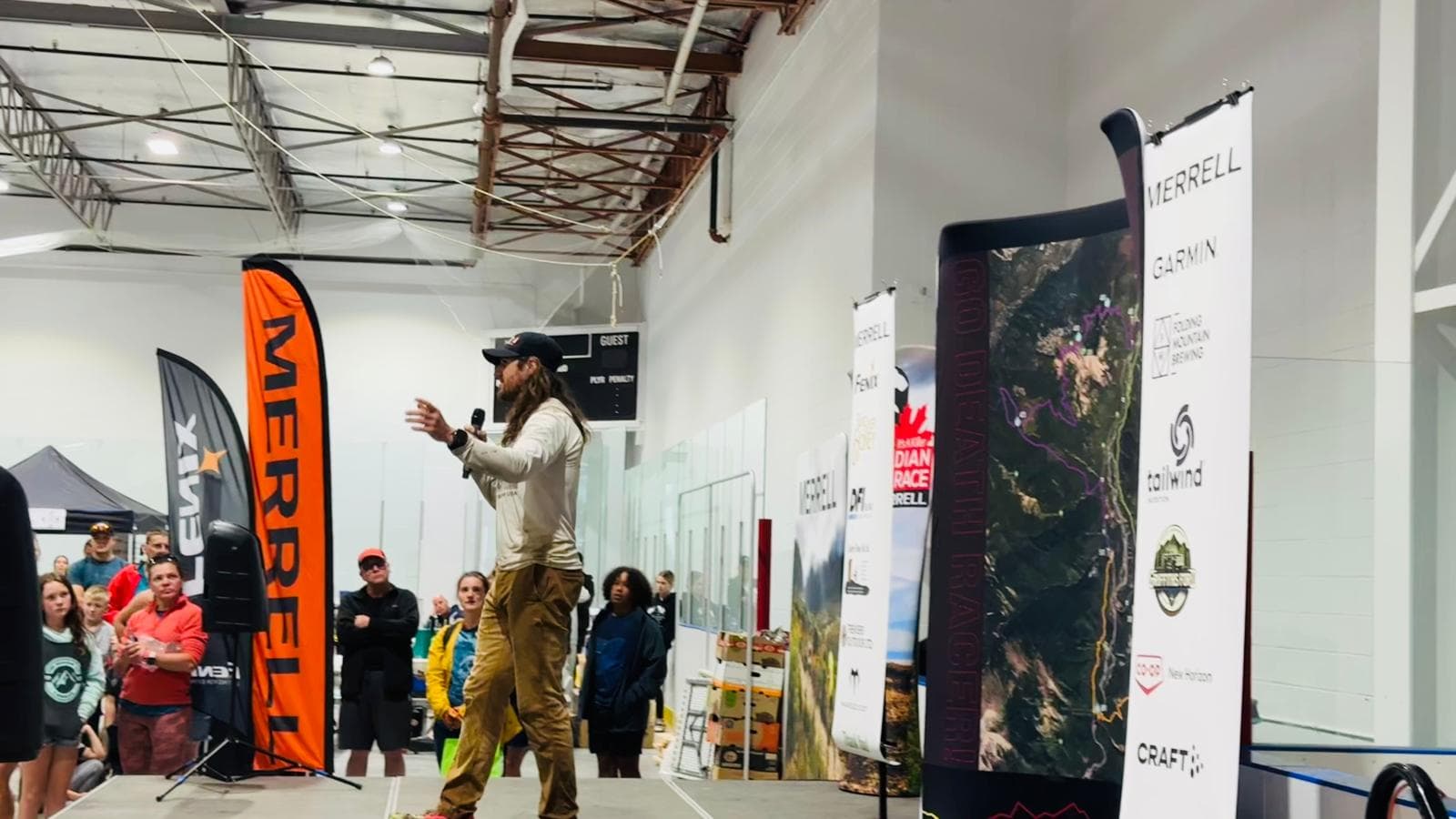
The Three Pillars
How hormesis becomes a leadership framework
Three principles that come out of the biology, and that I have tested over thousands of kilometres of trail. Each one came from a specific day in the field, and each one ends somewhere your people can start.
Be Bold, Start Cold
Begin before you feel ready
At five below, if you start a tempo run wearing your jacket, you are too warm inside ten minutes, you overheat through the workout, and then you carry a jacket you only ever needed to get out the door. Be bold, start cold means going without it and trusting your body to warm up as you get moving. That is the whole idea, and it is not really about jackets. You do not need every condition to be right before you begin. You can learn most of it along the way, and the learning happens faster once you are actually moving.
Takeaway: Pick the thing you have been waiting to feel ready for, and find the smallest version of it you can start this week without waiting.
Respect the Gradient
Adjust to the terrain without giving up the objective
A five minute kilometre on flat ground stops being a five minute kilometre the moment you add a hundred metres of climbing. You have two honest options. Work much harder to hold the pace, or hold the same effort and accept that the pace is slower. Both are fine. What does not work is pretending the ground did not change. Every new task has a learning curve built into it, and you will not have all the tools and resources on day one. You pick them up as you go, and it gets easier as you get stronger at the task. Sometimes you need to adjust your pace, or adjust your plan. You do not need to adjust the goal.
Takeaway: Name the gradient you are actually on right now, then decide out loud whether you are changing the effort or changing the timeline.
Cut the Trail
Do the work once so the people behind you do not have to
A trail gets cut two ways. Repetition is the first one: walk the same line often enough and your footprints press it into the ground until it is a trail whether you meant it or not. Intention is the second: you go out with the scissors and the chainsaw, cut back the branches, clear the deadfall, and the route is easier now because of the work you did. Both are learning. After a night in the Kananaskis where I had no way to call for help, I bought a Garmin inReach, and it has been part of who I am on the trail ever since. That is a trail I cut for myself. The part that matters at work is what happens next, when you hand somebody the system you built and they get to skip the bushwhack. I cut trail so your people can run it.
Takeaway: Think of one thing you learned the expensive way. What would it take to write it down this week so the next person on your team gets it for free?
A Second Signature Talk
Planning for single or
multi-day trail efforts.
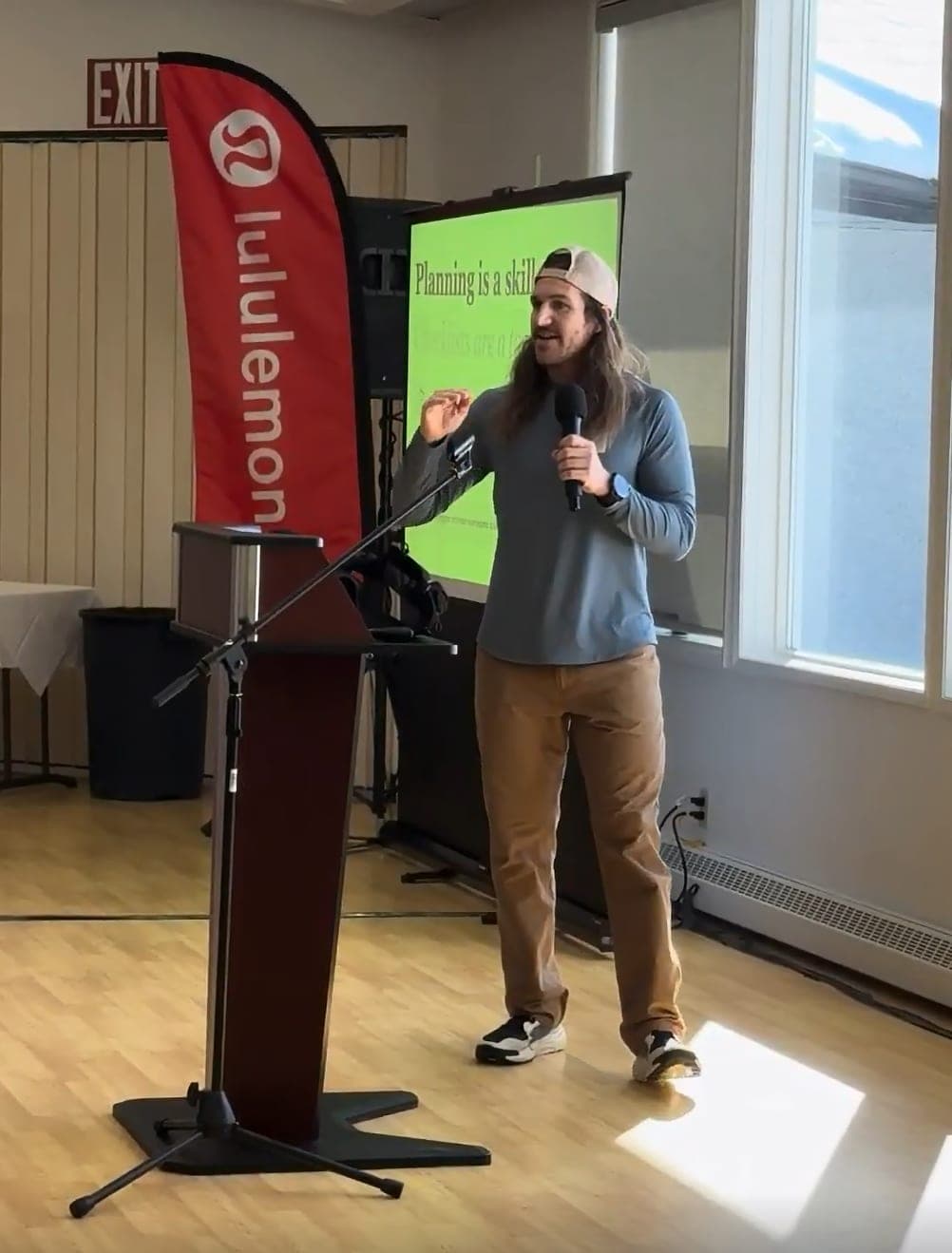
The Mountain Method is built for boardrooms and leadership teams. This one is built for the trail community: run clubs, race expos, gear nights, and outdoor brands. I put it together from the same system I use before every big effort in the mountains, and I have delivered it to rooms like Lululemon’s Love Your Run season in Calgary.
It is a practical, story-driven walk through how I actually plan a day or a multi-day push in the backcountry. The real decisions: reading the route before you pack a thing, being honest about pace, building in bailouts, and carrying for the effort in front of you instead of the one you are afraid of.
Planning is a skill like any other, which means it can be taught and it gets better with practice. The checklist people leave with is the tool that makes it repeatable once they are home and packing for their own day.
108.8 km
Bob Marshall Traverse
Unsupported out and back FKT, 9,377 m of climbing, with Cody Taylor
57 km
La Coulotte Ridge Traverse
Point to point, run 8 times, fastest 8h 30m
101.07 km
Crowsnest High Five
Standard Route FKT, 21h 23m, 7,122 m of climbing
The core idea
Three things most people learn the hard way, out where the plan meets the mountain.
More time out means more can change
The longer an effort runs, the more chances the weather, the light, and your own body have to turn it into a different day than the one you planned for. The plan has to hold when that happens.
Distance per hour is not linear
Terrain, fatigue, and weather reshape every estimate. A flat kilometre and a scree-covered climb are not the same effort, and planning them as if they were is how people run out of daylight.
Packing more does not make you more prepared
Past a point, extra weight just slows you down and wears you out, which makes you less safe rather than more. The right kit answers the route in front of you and nothing else.
Every item you carry does one of four jobs
This is the framework the whole talk builds toward. Sort your kit by what each piece is actually for, and the gaps show up before you leave the trailhead.
Movement + Carry
What keeps you moving forward: shoes, poles, the pack itself, and traction when the ground turns.
Fuel + Water
Energy and hydration to sustain the effort: 200 to 300 calories an hour, electrolytes, a filter and a backup.
Comfort + Protection
Cover for the elements and for hours on your feet: layers, a shell, and sun and chafe care.
Problem-Solving
What gets you home when something goes wrong: light, first aid, communication, and an emergency bivy.
This talk is the live version of a free tool
Those four categories are exactly how my Trail Adventure Planning Checklist is organized. Audiences leave the room and put the same framework to work that night, no email required.
Three questions, every time
The filter behind every gear choice. If a piece of kit does not answer one of these, it stays home.
How long could this realistically take?
Best pace versus walking pace, whether you will be moving after dark, and when the daylight window actually closes.
What happens if I stop moving?
Temperature exposure, an injury that keeps you still, and how fast conditions turn while you wait it out.
How do I get help if I need it?
Whether you can get yourself out, who is holding your trip plan, and how long a rescue could genuinely take.
- Home Base
- Crowsnest Pass, AB
- Territory
- Treaty 7 Territory
- Role
- Athlete & community builder
- Training
- Emergency Medical & Safety
About the Speaker
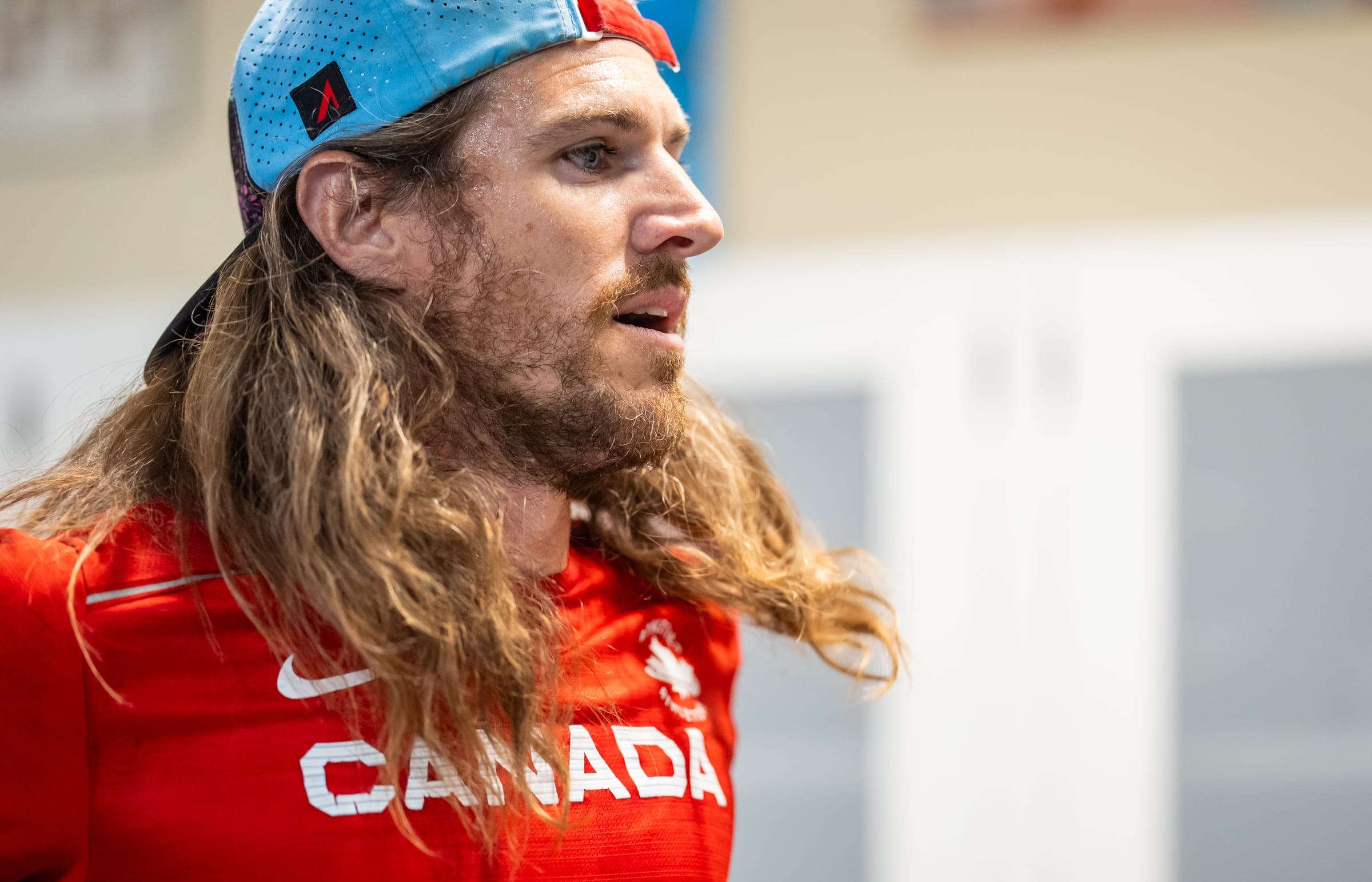
I’m Matt Shepard.
Most people just call me Shep.
I live in Crowsnest Pass, Alberta, on Treaty 7 Territory, and I spend as much time as I can moving through the mountains that surround this place. The Blackfoot Confederacy, the Ktunaxa, and the Tsuu T’ina Nations have deep roots in this land, and the more time I spend here the more I understand why. Some mornings I look at a map, sketch out a 50-kilometre loop through terrain I have never touched, walk out the door, and just go. I do it because this place is home and I genuinely love being in it. That kind of comfort took years to build, and the building of it is what the keynote is about.
I have run 701 kilometres in six days at Across the Years, for second overall and the around-the-clock course record. I was the first person to complete the 205-kilometre Columbia Plateau Trail on foot, which I did through a polar vortex in February. Cody Taylor and I set the first recorded unsupported out and back on the Bob Marshall Traverse in the Adirondacks. I have represented Team Canada five times at Big Dog’s Backyard Ultra. Alongside all of that I spent four years running field operations for Sinister Sports, and before that a working life in emergency medicine, fire, and industrial safety that started when I enlisted at eighteen. All of it shapes how I prepare, how I think, and what I bring into a room.
Running has opened doors I did not expect. In 2024, Elder Morris Little Wolf of the Piikani Nation gifted me a Blackfoot name: Ikkaayayi Sahkómapii, which translates as Swift Runner Boy. I am a supporter of the Buffalo Runners Society and I carry that relationship with a great deal of gratitude and care. Being welcomed into those spaces has deepened the way I think about the land I run on and the people who have known it for thousands of years.
When I speak, I bring the same presence I bring to the trail. Prepared, genuinely glad to be there, and focused on helping your people find their own gradient.
What to Expect
Built around the room you put me in.
Every session is tailored to your audience and your goals. Here is what you can count on.
Science your audience can use
The Mountain Method is grounded in hormesis, the biological process by which your nervous system expands its operating range in response to manageable stress. I explain it plainly and practically, through stories that make the science feel immediate and personal rather than academic.
Stories I have actually lived
Every story in the talk is mine, with the races, the routes, and the outcomes named. The detail is specific because the experience was, and audiences pick up on that difference quickly.
One concrete action, every time
The talk is built to send people out with a first step they actually want to take, and one small enough that they can take it that week. They leave with a framework they understand, language they can use with their own teams, and a clear place to start.
Add-ons that go deeper
Looking for more than a keynote? I also offer guided Q&A, facilitated team workshops, outdoor movement experiences, and branded team challenges. These are especially popular with groups that want to take the concepts outside and put them into practice. Ask about availability when you reach out.
20
Minutes
Core framework with one anchor story per pillar. A strong opener or closer for packed agendas.
45
Minutes
Full story development across all three pillars with audience reflection moments. The most requested format.
60+
Minutes
Extended keynote with guided activity and Q&A. Best for team off-sites and leadership development days.
Past Events
Rooms I have spoken in
The Mountain Method is a new keynote and I am booking it now. The rooms below were race briefings, community keynotes, workshops, and the trail planning talk. I would rather tell you that plainly than let a list imply something it does not.
- 2022 - 2026Sinister Sports Canadian Mountain Race SeriesRace briefings & Manager of Field Operations · Alberta/B.C.
- 2026Lululemon: Love Your Run SeasonKeynote: the trail planning talk · Calgary, AB
- 2025Buffalo Runners SocietyWorkshop & Pre-race motivation · Lethbridge, AB
- 2022Rotary International - SunriseCommunity Keynote · Richland, WA
- 2019Great Minds - ValleyviewPresenter & Event Host · Alberta
- + More to come (Summer 2026)
What People Say
From the people in the room
“Shep was a keynote speaker at our event, Love Your Run Season, and was instrumental in creating the buzz to it being sold out. Matt’s expertise and passion on trail and ultra running was felt by everyone in the room. His sense of humour and approachability made Matt a fan fav, with many people asking if he’d come back next year. I’d highly recommend Shep if you’re looking for an engaging and knowledgeable speaker!”
Your testimonial here?
Have you been to one of Shep’s keynotes or presentations? I would love to hear your feedback. Send me an email at media@goshep.run
Common Questions
A few things people ask
Book Shep
Tell me about your event
and your audience.
I will take it from there. I read every request myself and reply within 48 hours, and if The Mountain Method is not the right fit for your room I will say so.